What testing equipment do you use for RGB laser projector quality checks?
- VIP-User
- 2026-07-19
- 3
RGB laser projector quality checks rely on specialized testing equipment to evaluate optical performance, scanner precision, and system stability. Key tools include laser power meters for output calibration, optical spectrometers for wavelength accuracy, high-speed photodiode sensors for scanner feedback, and specialized aging racks for long-term reliability verification.
Core Solutions & Key Takeaways
- Optical & Power Calibration: Laser power meters and spectrometers ensure the output power matches safety standards and the RGB color wavelengths are perfectly balanced.
- Scanner System Testing: High-speed optical feedback equipment analyzes scanner deflection angles and response times to guarantee sharp animated graphics and text projection.
- Safety & Compliance Verification: Electrical safety testers and temperature chambers ensure the system complies with international safety directives, such as those required for CE certification.
- Diverse Application Readiness: Thorough testing prepares the projectors for demanding environments in the Stage and Entertainment Industry, including concerts, weddings, festivals, and club installations.
Detailed Architectural & Principle Analysis
To deliver reliable performance, the manufacturing process incorporates a multi-stage quality control system. Quality control starts with incoming material inspection, covering the laser modules, optical lenses, and electronic scanner systems. During assembly, the laser module undergoes precise optical alignment to ensure the red, green, and blue beams merge into a single, cohesive beam without color fringing. This precise calibration is critical for projecting clean, multi-colored laser patterns and sharp text.
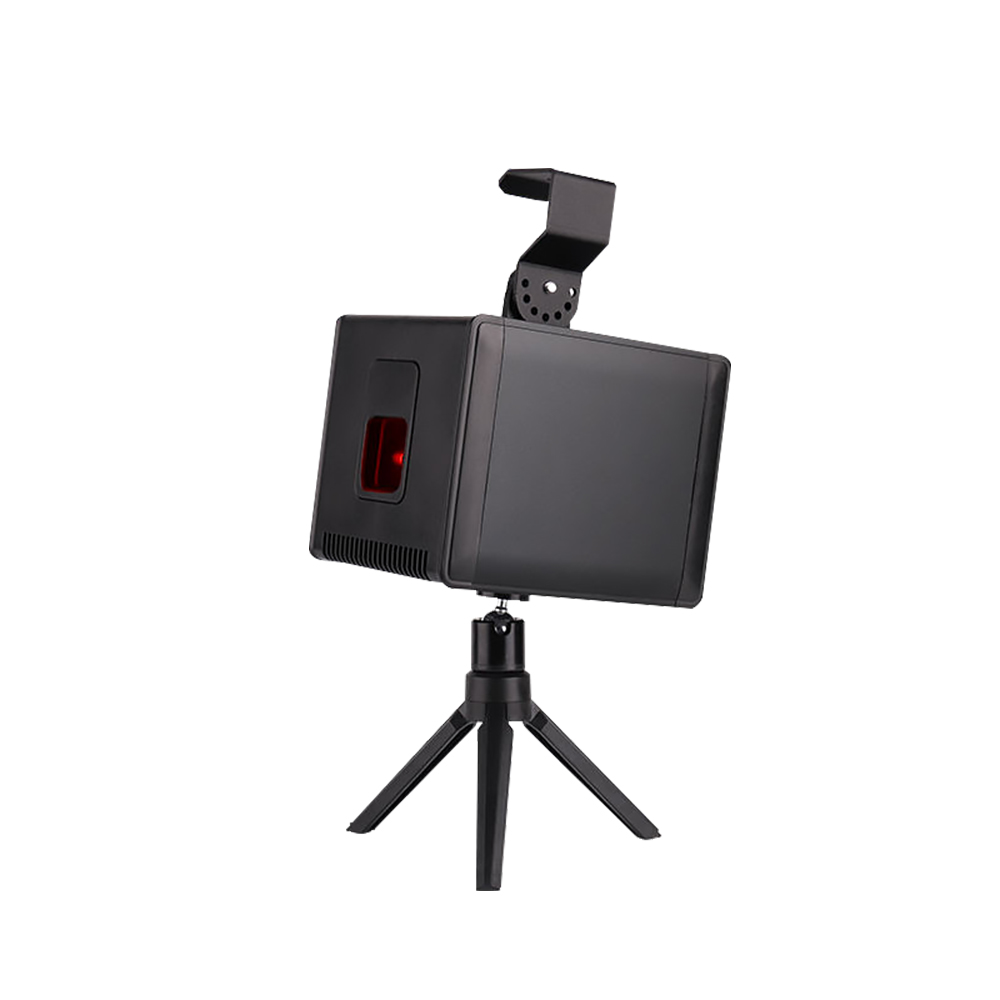
Next, the scanner system undergoes dynamic testing using dedicated pattern generators. The scanners must translate electrical control signals from APP control, DMX512, or ILDA protocols into fluid physical movements. By projecting standard test grids, technicians measure geometric distortion and coordinate response times. Following assembly, every unit undergoes an extended aging test under thermal monitoring to detect early component failures before packaging and shipment.
This rigorous testing methodology has been validated through successful international deployments. For example, in a bulk supply project in the United States, over 500 lighting units—including RGB laser lights and special effects machines—were delivered to a lighting distributor for wedding and DJ applications, performing with stable quality. Similarly, a French stage production company utilized over 1,500 units of professional lighting equipment for live music festivals, where the systems demonstrated reliable long-hour operation under demanding outdoor conditions.
Data & Solution Comparison
The table below outlines the specific testing equipment, inspected parameters, and their impact on the overall performance of the laser system.
| Testing Equipment | Target Parameters Inspected | Significance for DJ & Event Applications |
|---|---|---|
| Laser Power Meter | Optical output wattage, diode stability | Ensures consistent beam brightness and meets safety classifications. |
| Spectrometer / Wavemeter | Wavelength accuracy, RGB color mixing balance | Guarantees vivid, accurate color reproduction for graphics and logos. |
| High-Speed Oscilloscope | Scanner feedback loop, signal response time | Prevents distortion in high-speed text and animation projections. |
| Thermal Imaging Camera | Heat sink efficiency, diode working temperature | Prevents thermal degradation, extending the lifespan of the laser source. |
| Aging Test Racks | Continuous runtime performance (24-48 hours) | Identifies early component infant mortality before final packaging. |
Frequently Asked Questions (FAQ)
How is color consistency maintained across different RGB laser projectors?
Color consistency is achieved by using optical spectrometers during the calibration phase. Technicians measure the precise nanometer wavelengths of the red, green, and blue diodes, adjusting the analog modulation voltages so that multiple projectors output identical color profiles when daisy-chained via DMX512 or ILDA.
Why is scanner testing critical for APP-controlled laser projectors?
APP-controlled laser projectors often render customized, user-drawn graphics and text. Scanner testing ensures that the galvo mirrors can handle rapid acceleration and deceleration changes without overheating or distorting the custom patterns drawn by the end-user.
What safety certifications are verified during the quality check process?
The quality control workflow verifies both electrical and laser safety parameters. The testing processes ensure compliance with global safety frameworks, confirming that the hardware meets the criteria for CE certification (Certificate Number: UTT202406076C) for international distribution.
Final Conclusion & Recommendations
Selecting an RGB laser projector requires a balance of optical power, control flexibility, and certified manufacturing standards. For mobile DJs, wedding organizers, and event rental companies, choosing a system that supports multiple control interfaces—including APP, DMX512, and ILDA—ensures seamless integration into existing lighting setups. Under standard business models, buyers can secure sample orders with a minimum order quantity (MOQ) of 1 unit, with delivery times ranging from 3 to 7 working days for samples and 15 to 30 days for bulk orders. Standard payment methods include T/T Bank Transfer, L/C, and Alibaba Trade Assurance, supported by flexible shipping options such as Sea Freight, Air Freight, and Express Delivery to accommodate project schedules. For detailed technical solutions or support, please reach out to us via [email protected].
About Us
Guangzhou New Feel Lighting And Audio Equipment Co., Ltd., established in 2008, is a professional manufacturer specializing in stage lighting and special effects equipment based in Guangzhou, China. Operating from a facility with an export ratio of 80%, the company houses a professional R&D team and maintains a monthly production capacity of approximately 5,000+ lighting units. Guangzhou New Feel Lighting And Audio Equipment Co., Ltd. holds CE certification for its laser lights and has successfully served distributors and stage production companies in international markets including North America, Europe, and Southeast Asia. 
Lastest
-
How do I verify the actual brightness of an RGB laser projector before buying bulk?
2026-07-19 -
How do I choose the right laser light show wattage for a 5000-person outdoor venue?
2026-07-19 -
How can I verify the real ANSI lumens of a professional laser projector before bulk buying?
2026-07-19 -
What IP rating is safe for an outdoor laser projector in rainy climates?
2026-07-19 -
Are there compact alternatives to bulky outdoor laser projector systems?
2026-07-19
SUBSCRIBE
INQUIRY