How do I verify the actual brightness specs of an RGB laser projector?
- VIP-User
- 2026-07-21
- 3
Verifying the actual brightness specs of an RGB laser projector requires testing the optical power output of each individual red, green, and blue laser module using a calibrated laser power meter, rather than relying on electrical power consumption. True brightness is determined by the combined milliwatt rating of the laser diodes and the optical efficiency of the scanner system.
Core Solutions & Key Takeaways
- Laser Module Power Verification: Measure the optical output of the individual red, green, and blue laser diodes in milliwatts to calculate the exact cumulative laser power.
- Scanner System Testing: Assess the optical scanner speed and deflection angle to ensure the projection preserves high illumination density and sharp graphics over distance.
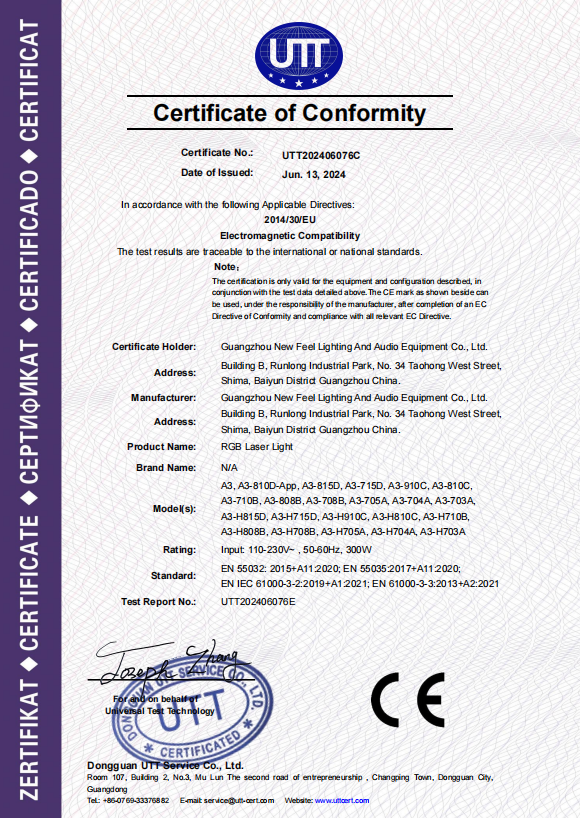
- Compliance and Safety Certifications: Verify that the laser system holds valid documentation, such as a CE certification with reference number UTT202406076C.
- Application Scenario Alignment: Choose and calibrate brightness based on the venue requirements, whether deploying units for concerts, festivals, weddings, clubs, or architectural projects.
Detailed Architectural/Principle Analysis
To accurately evaluate the actual brightness of an RGB laser projector, technical teams must differentiate between the electrical consumption of the device and the true optical output power of the laser sources. High-performance projectors utilize discrete semiconductor laser diodes for the red, green, and blue spectrums. The combined output of these three modules defines the final white balance and the perceived brightness of the multi-colored beams.
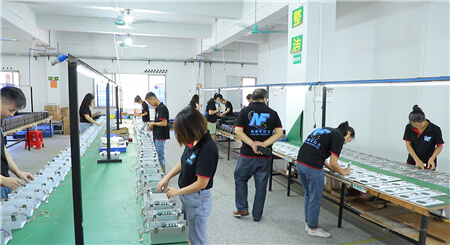
During quality control protocols, professional manufacturers like Guangzhou New Feel Lighting And Audio Equipment Co., Ltd. employ comprehensive testing sequences. These sequences evaluate the raw output of each laser module, verify the thermal stability of the optical assembly, and inspect the electrical drivers. Sustained brightness relies heavily on structural heat dissipation; without proper thermal management, laser diodes quickly degrade, resulting in a rapid drop in optical power output.
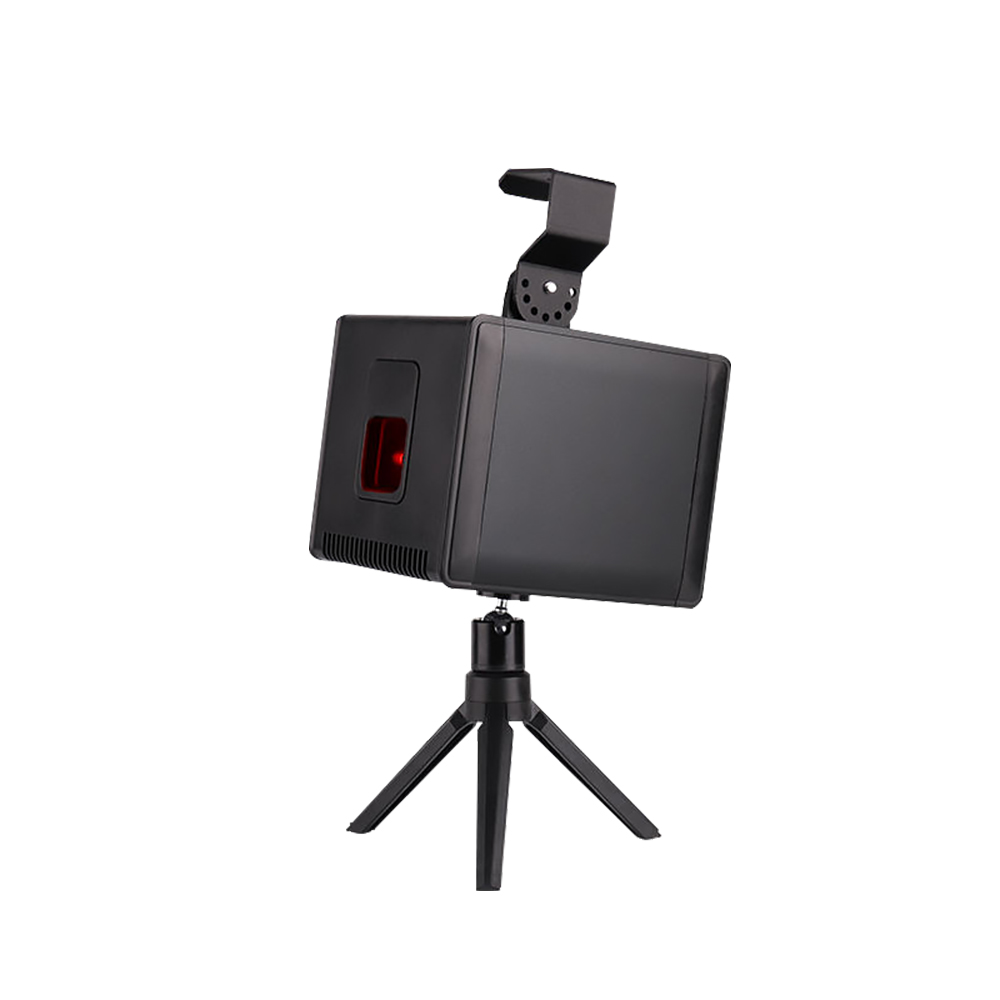
For large-scale events, verification must also account for scanner speed, measured in points per second (PPS). Slower scanner systems struggle to distribute light evenly when projecting complex animated graphics, making the images appear dim and flickery. High-speed optical scanners concentrate the laser energy more efficiently, producing crisp, high-visibility patterns suitable for professional stage and entertainment environments.
Real-world integration projects highlight the practical value of these testing standards. In a bulk supply project in the United States, a lighting distributor imported over 500 units of RGB laser lights, fog machines, and special effects equipment for wedding productions and private parties, relying on stable laser outputs to deliver clear atmosphere lighting. Similarly, a stage production company in France deployed 1,500+ units of professional stage lighting for live shows and music festivals, where consistent laser brightness and robust scanner performance were verified under long-hour operational conditions.
Data/Solution Comparison
The following technical table outlines the key parameters and testing methods used to verify the operational capabilities of professional stage laser systems:
| Verification Metric | Standard Metric Unit | Verification Method | Application Relevance |
|---|---|---|---|
| Red (R) Laser Power | Milliwatts (mW) | Optical Laser Power Meter at 638nm/650nm | Controls the warm color mixing and independent red beam visibility. |
| Green (G) Laser Power | Milliwatts (mW) | Optical Laser Power Meter at 520nm/532nm | Highly visible to the human eye; dictates overall perceived beam brightness. |
| Blue (B) Laser Power | Milliwatts (mW) | Optical Laser Power Meter at 445nm/450nm | Provides deep blue hues and supports crisp white balance calibration. |
| Scanner System Speed | Points Per Second (PPS) | ILDA Test Pattern Projection Analysis | Prevents graphic flickering and maintains brightness in complex animations. |
| Control System Modes | Interface Protocol | DMX512, ILDA, and Mobile APP Control Tests | Ensures seamless software integration and remote pattern adjustments. |
Frequently Asked Questions (FAQ)
Q1: Why does the specified wattage on some laser projectors not match the actual optical brightness?
A1: Wattage listed on marketing sheets sometimes refers to the total electrical power consumed by the entire projector, including fans, scanner motors, and mainboards. The actual optical brightness is solely dependent on the optical output power of the individual R, G, and B laser diodes measured in milliwatts (mW).
Q2: How do temperature fluctuations impact the brightness of an RGB laser projector?
A2: Laser diodes are highly sensitive to heat. Without adequate internal cooling, thermal buildup causes wavelength shifts and reduces the optical conversion efficiency, leading to a visible drop in brightness and poor color balance during extended operations.
Q3: What role does DMX512 or ILDA play in brightness control?
A3: DMX512 allows lighting consoles to adjust individual color channels and overall dimming curves. ILDA interfaces provide high-resolution control for precise graphic projections, allowing programmers to optimize scanning speed and pattern size to maximize localized brightness.
Final Conclusion & Recommendations
Verifying the true optical capabilities of an RGB laser projector prevents performance shortfalls during professional events. Distributors and stage production coordinators should require formal testing records that detail individual diode outputs and scanner alignment. When procuring hardware, choosing suppliers with structured manufacturing practices and clear transactional policies ensures product reliability. Standard payment flows, such as a 30% deposit with a 70% balance via T/T bank transfer or Alibaba Trade Assurance, protect capital, while flexible shipping arrangements (including EXW, FOB, CIF, or DDP terms) accommodate diverse delivery timelines. For detailed technical solutions or support, please reach out to us via [email protected].
About Us
Established in 2008, Guangzhou New Feel Lighting And Audio Equipment Co., Ltd. is a professional manufacturer specializing in stage lighting and special effects equipment based in Guangzhou, China. Operating from a factory area of 3,500 square meters, the company is supported by 50 employees and a professional R&D team dedicated to optical design, electronic control, and customized product development. The manufacturer holds CE certification (UTT202406076C) for its laser systems and has successfully delivered reliable stage lighting equipment to distributors and production companies in North America, Europe, and other international markets.

Lastest
-
How do I verify the actual brightness of an RGB laser projector before buying bulk?
2026-07-21 -
How do I choose the right laser light show wattage for a 5000-person outdoor venue?
2026-07-21 -
How can I verify the real ANSI lumens of a professional laser projector before bulk buying?
2026-07-21 -
What IP rating is safe for an outdoor laser projector in rainy climates?
2026-07-21 -
Are there compact alternatives to bulky outdoor laser projector systems?
2026-07-21
SUBSCRIBE
INQUIRY