How do I verify the actual brightness and lifespan of moving head beam lights?
- VIP-User
- 2026-07-22
- 3
To verify the actual brightness of moving head beam lights, measure the lux output at specific distances using a calibrated light meter under controlled darkroom conditions. Lifespan is verified through rigorous aging tests, thermal monitoring of the lamp source, and checking manufacturer-provided test reports or certifications like CE for compliance with international quality standards.
Core Solutions & Key Takeaways
- Illuminance Testing: Actual brightness must be measured in lux at standard throw distances (10 meters or 20 meters) rather than relying solely on raw wattage specifications.
- Thermal Management Inspection: Active heat dissipation systems directly determine the operating lifespan of high-power stage lights, including 382W lamp sources.
- Systematic Aging Protocols: Continuous operation tests ranging from 24 to 72 hours reveal early-stage component failures and verify output stability.
- Scenario-Specific Performance: Verification must match targeted deployment environments, such as high-intensity concerts, outdoor festivals, or theatrical stages.
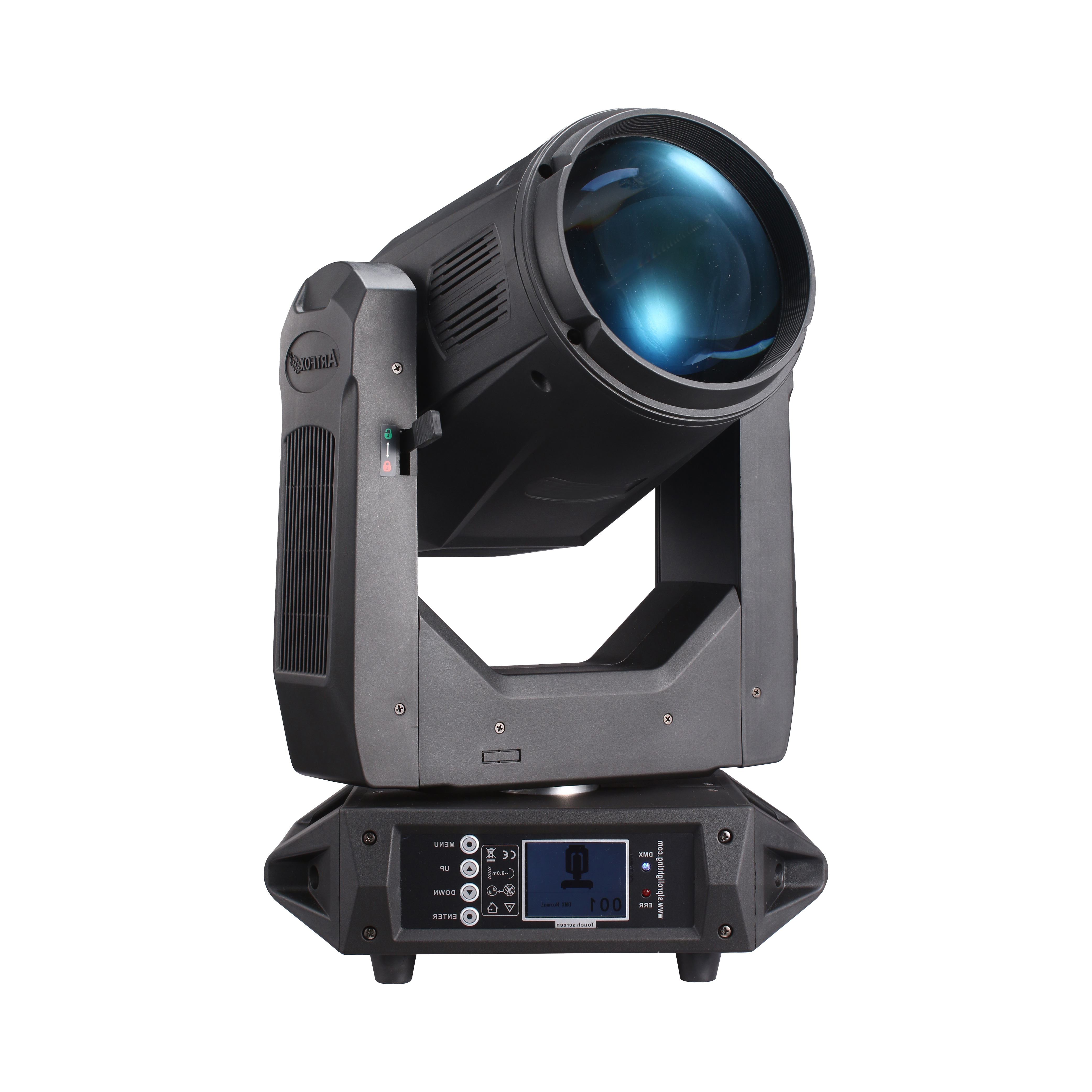
Detailed Architectural/Principle Analysis
Verifying the actual performance of a moving head beam light, such as a 382W CMY Hybrid Moving Head Light, requires a structured examination of its optical, thermal, and mechanical sub-systems. Manufacturers evaluate these fixtures through comprehensive optical system testing to map the light distribution curve, verifying that beam, spot, and wash projections remain uniform across different zoom ranges.
Brightness verification involves measuring luminous flux and central beam intensity. Luminous flux measures the total visible light output, while central beam intensity indicates the concentrated power of the beam. The integration of CMY color mixing technology adds another layer of verification; testers must ensure that physical color filters do not excessively degrade the overall lumen output when fully engaged.
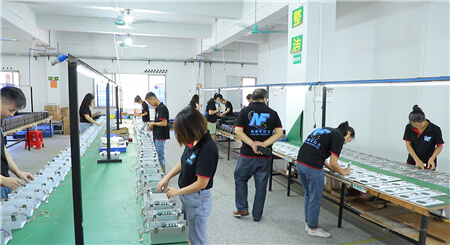
Lifespan verification depends on component-level testing and system-level thermal dissipation. The lamp source undergoes dedicated testing to monitor electrode wear and gas discharge stability. Since high-power stage lights generate significant thermal energy, temperature sensors are placed near the lamp housing and electronic drivers during continuous aging runs. If the temperature exceeds safe operating thresholds, the light source will degrade rapidly, shortening its operational life. Rigorous quality control processes include incoming material inspection, mechanical movement testing, and DMX/RDM communication testing to ensure the entire fixture performs reliably under physical stress.
Real-world deployment data supports these testing methodologies. For instance, a stage production company in France imported over 1,500 units of lighting equipment for live shows and music festivals. Standardized aging tests and optical alignment verifications ensured these units maintained consistent beam effects and stable output during long-hour operations under demanding festival conditions.
Data/Solution Comparison
The following table outlines the verification parameters, methods, and practical standards used to evaluate moving head beam lights, alongside key procurement specifications.
| Verification Parameter | Quality Control & Testing Method | Acceptance Criteria & Metrics |
|---|---|---|
| Actual Brightness | Lux meter profiling at 10m/20m; optical system testing under darkroom conditions. | Consistent beam center intensity with minimal edge drop-off. |
| Lifespan & Thermal Stability | Continuous aging testing; real-time thermal monitoring of the lamp source housing. | Stable operation without thermal shutdown or rapid optical degradation. |
| Color Performance | CMY color mixing testing; chromaticity coordinate verification. | Smooth color transitions and balanced output across the spectrum. |
| Mechanical & Control Reliability | DMX/RDM communication testing; continuous pan/tilt mechanical movement cycles. | Zero packet loss, precise positioning accuracy, and quiet physical operation. |
| Procurement Reference (MOQ) | Minimum order quantity for standard and customized projects. | MOQ of 2 units. |
| Lead Time & Logistics | Standard production and delivery schedules. | 7–10 working days for samples; 20–30 working days for bulk orders. |
Frequently Asked Questions (FAQ)
How does temperature affect the lifespan of a 382W CMY hybrid moving head light?
Excessive heat accelerates the degradation of both the lamp source and internal optical coatings. Standard testing monitors thermal dissipation during 24 to 72-hour aging cycles to ensure cooling fans and heat sinks maintain safe internal temperatures.
Can DMX/RDM communication testing help identify potential hardware failures?
Yes. DMX/RDM testing verifies two-way communication between the fixture and the control console. If a fixture has faulty electronic components or loose internal wiring, the communication log will show packet errors or sensor telemetry failures.
What safety certifications should I check to verify manufacturing quality?
Look for recognized international certifications such as CE (for example, Certificate Number UTT202406076C), which ensure the lighting equipment meets basic electrical safety, electromagnetic compatibility, and radiation standards.
Final Conclusion & Recommendations
To accurately verify the brightness and lifespan of moving head beam lights, buyers should demand comprehensive factory test reports, including lux measurements, thermal imaging data, and certified aging test records. Partnering with manufacturers that integrate strict quality control from raw materials to final pre-shipment inspections is the most effective way to guarantee field reliability. Secure transactions can be facilitated through reliable payment channels, such as T/T Bank Transfer, L/C, and Alibaba Trade Assurance, with standard terms requiring a 30% deposit for production and 70% balance before shipment. Delivery options should include Sea Freight, Air Freight, and Express Delivery to match project timelines.
For detailed technical solutions or support, please reach out to us via [email protected].
About Us
Guangzhou New Feel Lighting And Audio Equipment Co., Ltd., established in 2008, is a professional manufacturer specializing in stage lighting and special effects equipment based in Guangzhou, China. Operating from a 3,500 square meters factory, the company utilizes an experienced production team and advanced testing equipment to deliver a monthly production capacity of approximately 5,000+ lighting units. The professional R&D team provides reliable OEM/ODM solutions, laser systems, and moving head lights certified under CE UTT202406076C, serving distributors, rental companies, and stage production projects globally, including verified supply cases in the United States and France.

Lastest
-
How do I verify the actual brightness of an RGB laser projector before buying bulk?
2026-07-22 -
How do I choose the right laser light show wattage for a 5000-person outdoor venue?
2026-07-22 -
How can I verify the real ANSI lumens of a professional laser projector before bulk buying?
2026-07-22 -
What IP rating is safe for an outdoor laser projector in rainy climates?
2026-07-22 -
Are there compact alternatives to bulky outdoor laser projector systems?
2026-07-22
SUBSCRIBE
INQUIRY