How do I choose the right beam angle for an outdoor stage moving head light?
- VIP-User
- 2026-07-18
- 5
Choosing the right beam angle for an outdoor stage moving head light requires matching the fixture's optical output to your projection distance and venue size. Narrow beam angles under 5 degrees create sharp, high-intensity aerial effects, while wider angles exceeding 20 degrees are ideal for textured spot projections and broad stage wash coverage.
Core Solutions & Key Takeaways
- Select narrow beams (1.5° to 5°) for aerial effects: Tight angles concentrate light over long distances, producing the high-impact, solid-looking beams necessary for outdoor festivals, concerts, and stadium events.
- Use mid-range angles (10° to 20°) for pattern projection: These angles are optimal for projecting crisp gobos and sharp textures onto stage floors, architectural facades, or outdoor backdrops.
- Deploy wide angles (20° to 50°+) for uniform wash coverage: Wide beams blend colors smoothly to illuminate large performance areas, backing bands, or scenic elements without creating harsh hotspots.
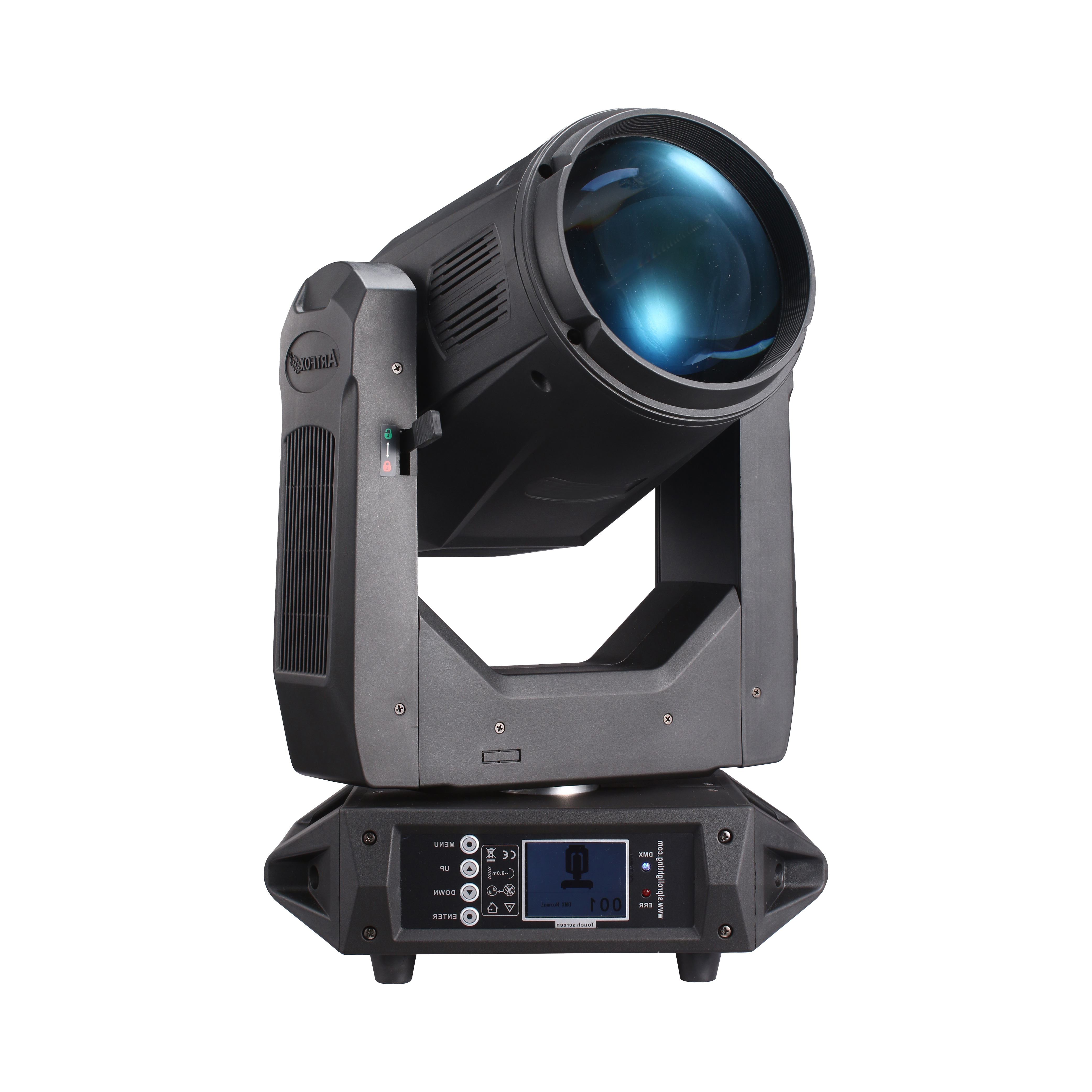
- Leverage hybrid fixtures for ultimate versatility: Utilizing a 3-in-1 hybrid light that combines beam, spot, and wash functions allows production teams to dynamically adjust beam angles mid-show to suit changing performance needs.
Detailed Architectural & Principle Analysis
The beam angle of a moving head light is determined by its internal optical system, specifically the relationship between the light source, the reflector, and the positioning of the focusing lenses. In outdoor stage environments, ambient light pollution and vast open spaces rapidly dissipate light intensity. To maintain visibility, the optical design must precisely control light divergence. A narrower angle keeps the photons concentrated in a tight column, maximizing the center lux and allowing the beam to travel hundreds of meters through the air.
For professional venues, a hybrid lighting fixture offers the most adaptable solution. High-performance units, such as the 382W CMY Hybrid Moving Head Light, integrate advanced optical zoom systems and CMY color mixing technology. This allows a single fixture to transition seamlessly from a tight, solid beam to a wide, soft-edged wash. This flexibility is highly beneficial for outdoor festivals and live concerts where a single rig must deliver both dramatic aerial beam choreography and subtle stage color washes. During a United States event lighting supply project, a distributor deployed over 500 lighting units, including specialized stage effects and moving lights, to achieve this balance across diverse private and public entertainment venues.
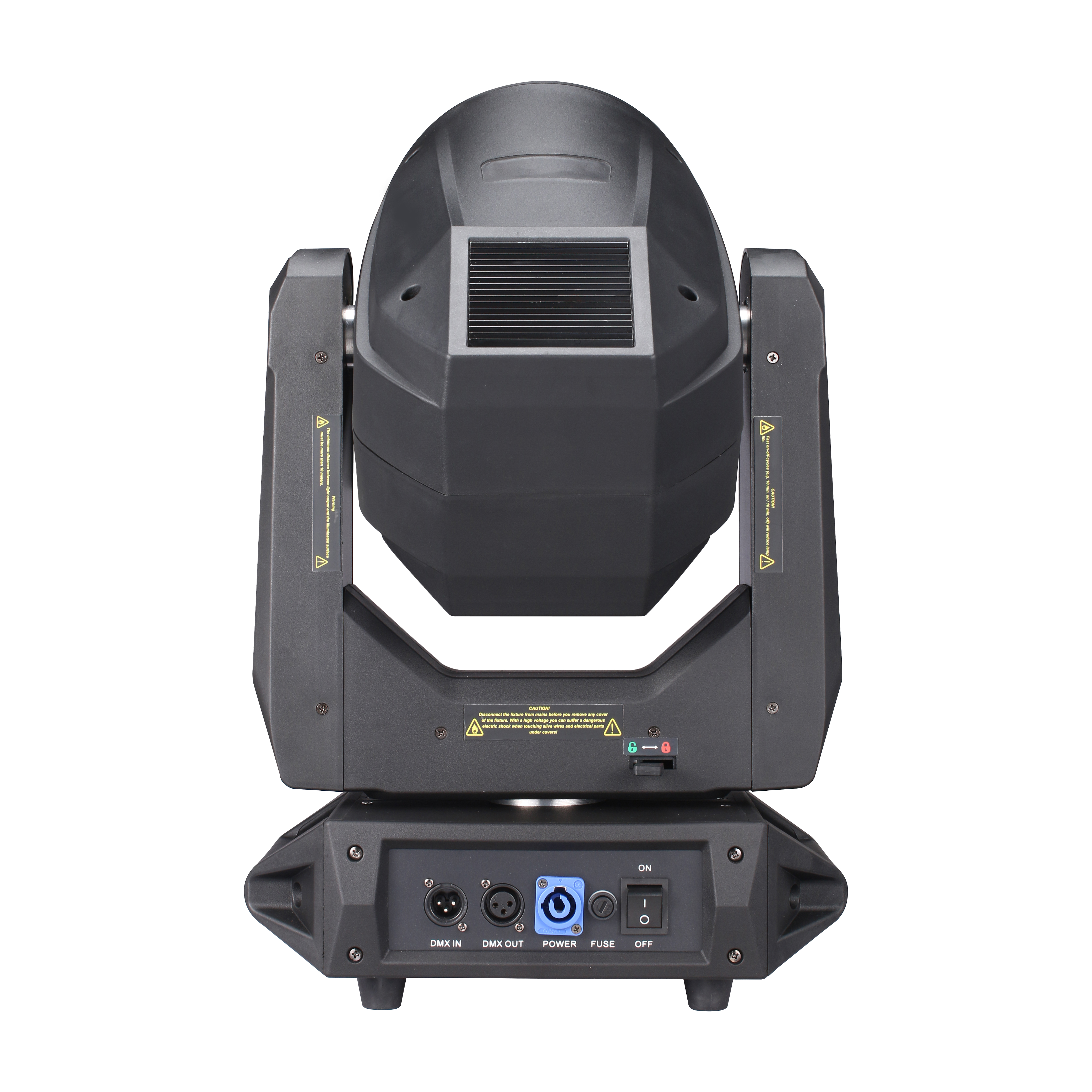
Furthermore, outdoor applications demand rigorous product reliability. Fixtures must undergo extensive testing, including optical system calibration, mechanical movement tests, and DMX/RDM communication verification. For instance, professional-grade laser and moving head systems carry global certifications like the CE certification (Number: UTT202406076C) to guarantee stable operation under demanding event conditions. Stage production companies in France have successfully utilized these certified systems in major music festivals and live shows, reporting consistent output and stable performance over long operational hours.
Data & Solution Comparison
The following table compares different optical configurations for moving head lights based on their typical stage applications, helping you choose the correct beam angle for your outdoor setup.
| Fixture Mode / Configuration | Beam Angle Range | Primary Stage Application | Optimal Projection Distance | Coverage Characteristic |
|---|---|---|---|---|
| Beam Mode | 1.5° - 5° | Aerial beam effects, mid-air graphics, and high-energy rhythm tracking | 30 to 150+ meters | Extremely concentrated, high center intensity, minimal dispersion |
| Spot Mode | 8° - 20° | Crisp gobo projection, textured patterns, and pinpoint talent highlighting | 15 to 40 meters | Sharp, defined edges with uniform light distribution across the field |
| Wash Mode | 22° - 50° | Broad color blending, stage illumination, and architectural background washes | 5 to 20 meters | Soft, diffused edges with smooth color mixing and no visible hotspots |
Frequently Asked Questions (FAQ)
Q1: Why does a narrow beam angle look brighter than a wide beam angle using the same light source?
A1: A narrow beam angle concentrates the total luminous flux of the lamp into a highly compressed area. Because the light energy is not spread out, the lux level (brightness per square meter) at the center of the beam is significantly higher than when the same light is dispersed over a wider angle.
Q2: Can I use indoor moving head lights for outdoor stages if the weather is clear?
A2: It is not recommended. Outdoor environments present unpredictable factors like humidity, dust, and temperature shifts. Outdoor stage productions require fixtures with robust structural optimization, reliable thermal management, and professional sealing to protect the delicate optical zoom and CMY color mixing components from dust and moisture.
Q3: How does CMY color mixing affect the output of my stage beam?
A3: CMY color mixing uses cyan, magenta, and yellow filters to subtract specific wavelengths of light, allowing for an infinite spectrum of custom colors. While dense saturated colors naturally absorb some light output, high-power fixtures like the 382W hybrid light compensate with efficient optical paths to maintain punchy, vibrant beams even when deeply saturated colors are selected.
Final Conclusion & Recommendations
Selecting the right beam angle depends on whether your project requires high-impact aerial graphics, clean pattern projections, or wide color washes. For large-scale outdoor events, utilizing multi-functional hybrid fixtures with motor-driven zoom systems provides the greatest operational flexibility. When purchasing equipment, distributors and rental companies should prioritize manufacturers that implement strict quality control processes—including incoming material inspections, mechanical movement calibration, and comprehensive pre-shipment testing—to ensure long-term reliability in challenging environments. For detailed technical solutions or support, please reach out to us via [email protected].
About Us
Guangzhou New Feel Lighting And Audio Equipment Co., Ltd., established in 2008, is a professional manufacturer specializing in stage lighting and special effects equipment based in Guangzhou, China. Operating from a 3,500 square meter factory with a dedicated R&D team and 50 employees, the company specializes in RGB laser lights, outdoor laser projectors, moving head lights, and stage special effects. The brand has developed strong OEM/ODM capabilities, delivering a monthly production capacity of over 5,000 professional lighting units to global distributors, rental companies, and project contractors across North America, Europe, and other international markets. The company's laser lighting products hold CE certification (Certificate Number: UTT202406076C) to ensure reliable performance for professional stage and entertainment applications.

Lastest
-
How do I verify the actual brightness of an RGB laser projector before buying bulk?
2026-07-18 -
How do I choose the right laser light show wattage for a 5000-person outdoor venue?
2026-07-18 -
How can I verify the real ANSI lumens of a professional laser projector before bulk buying?
2026-07-18 -
What IP rating is safe for an outdoor laser projector in rainy climates?
2026-07-18 -
Are there compact alternatives to bulky outdoor laser projector systems?
2026-07-18
SUBSCRIBE
INQUIRY