How can I test the actual brightness of a moving head beam light before buying?
- VIP-User
- 2026-07-18
- 3
To test the actual brightness of a moving head beam light before buying, measure its illuminance in lux at specific distances (such as 5 or 10 meters) using a calibrated lux meter. Evaluate the optical path efficiency, lamp source wattage—like a 382W CMY engine—and the consistency of the beam hotspot to verify real-world output rather than relying solely on theoretical lumens.
Core Solutions & Key Takeaways
- Lux Meter Testing at Standard Distances: Measure the beam center brightness at defined points (e.g., 10 meters) to calculate actual output instead of theoretical source lumens.
- Optical System Integrity: Assess the quality of internal lenses and reflectors, as high-grade optics prevent light scatter and ensure maximum beam concentration.
- Real-World Scenario Evaluation: Test the fixture in actual stage and entertainment industry setups to verify how the light performs alongside other effects like fog, wash lights, or laser projectors.
- Power and Source Verification: Confirm the lamp source draw, such as a 382W CMY hybrid configuration, to ensure it matches the manufacturer specifications under full operational load.
Detailed Architectural/Principle Analysis
Theoretical lumen output refers to the raw light emitted by the lamp source, whereas actual brightness (lux) depends on the efficiency of the optical path, reflectors, and zoom lenses. For a professional Guangzhou New Feel Lighting And Audio Equipment Co., Ltd. fixture like the 382W CMY hybrid moving head light, the actual beam intensity relies on a precisely aligned optical system that minimizes internal light loss. Testing these components directly helps identify whether the luminaire delivers the projected intensity required for professional concert and festival environments.
When conducting a physical brightness test, project the beam onto a flat white surface in a dark room. Measure the center spot (hotspot) and the edges to determine beam uniformity. An efficient moving head beam light displays a sharp, concentrated center with minimal halo or chromatic aberration. During testing, checking the fixture's communication and control protocols via DMX/RDM ensures stable motorized zoom and focus adjustments, which directly impact beam concentration and apparent brightness. 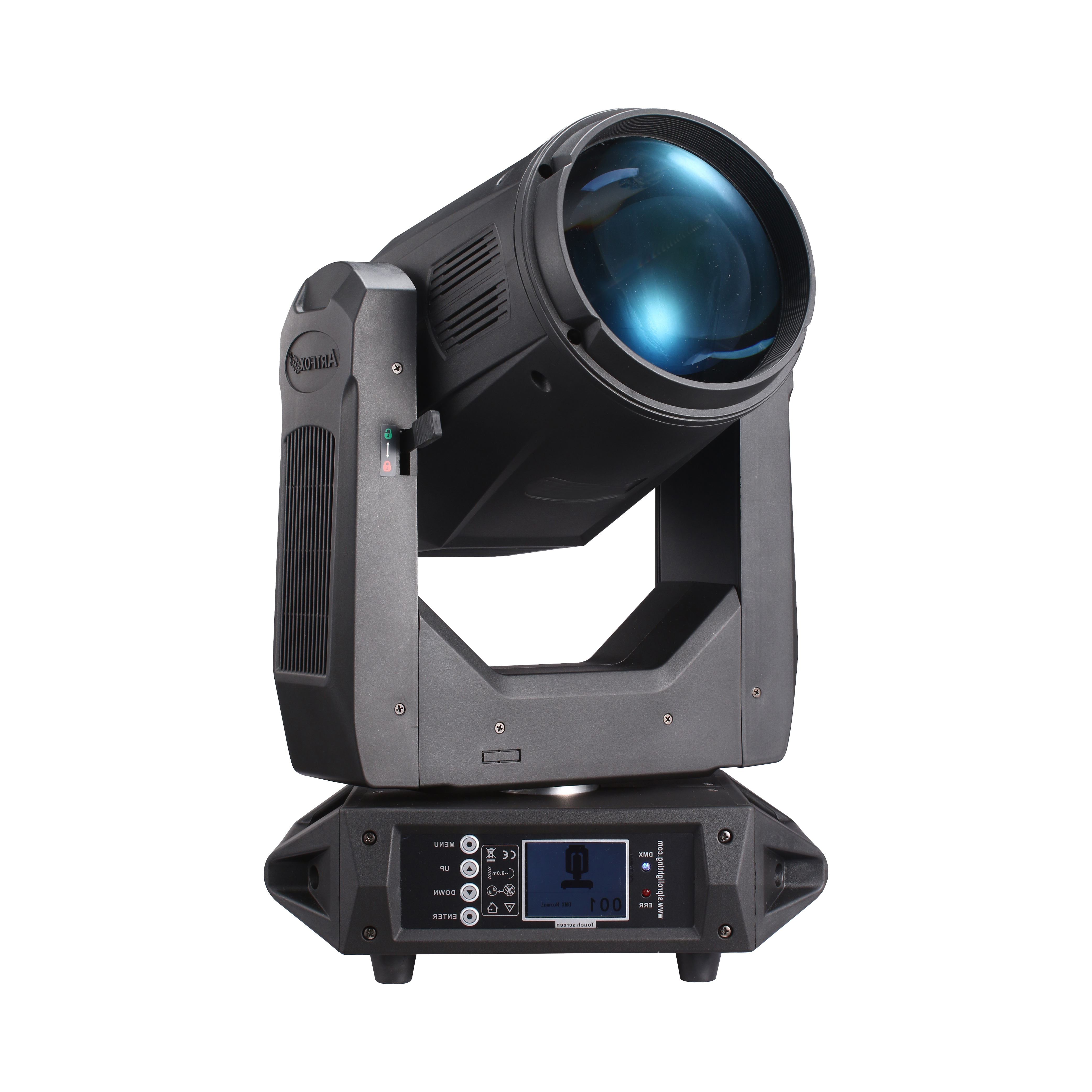
This systematic testing process aligns with industry standards used by stage production companies. For instance, a professional stage production client in France verified these brightness metrics during the supply of 1,500+ units of lighting equipment for large music festivals. Ensuring stable lux output during long-hour operations avoids thermal throttling, which can cause the lamp source to dim over time.
Thermal management plays a key role in maintaining brightness. If the cooling system is inadequate, the light source overheats, resulting in a rapid drop in illumination. During the quality inspection process, running an aging test of at least 2 to 4 hours helps verify if the brightness remains stable under continuous load. 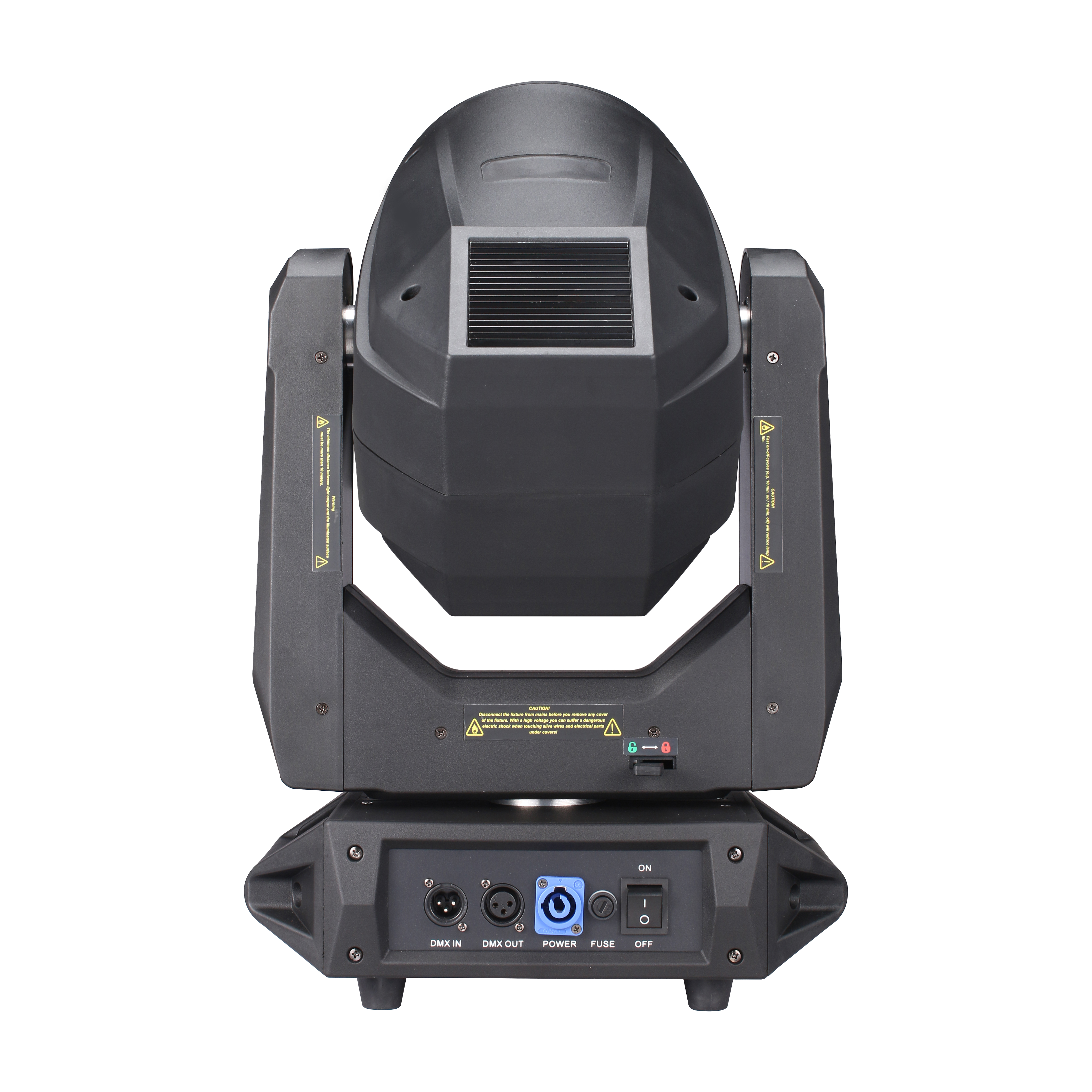
Data/Solution Comparison
| Parameter | Specification / Testing Method | Details |
|---|---|---|
| Actual Brightness Test | Lux meter measurement at 10m | Verifies real-world beam center intensity and uniformity |
| Quality Inspection | Multi-stage verification | Includes incoming material, optical system, CMY mixing, and aging tests |
| Minimum Order Quantity | 2 Units | Minimum order requirement for professional stage fixtures |
| Payment Options | T/T, L/C, Alibaba Trade Assurance | 30% deposit to start production, 70% balance payable before shipment |
| Shipping Logistics | Sea Freight, Air Freight, Express | Delivery times range from 7 to 30 working days depending on order type |
Frequently Asked Questions (FAQ)
Can I rely solely on the manufacturer's lumen rating when buying a moving head beam light?
No. Lumen ratings often represent the raw lamp source output under ideal conditions. Actual brightness (lux) depends on optical transmission efficiency, reflector quality, and zoom lens calibration, making physical lux testing necessary.
How does CMY color mixing affect the brightness of a moving head beam light?
CMY color mixing systems use physical filters to subtract light wavelengths. Blending colors reduces overall brightness compared to the open white beam, so testing the light output with fully saturated filters is essential to evaluate real-world performance.
What is the recommended setup for a pre-purchase brightness test?
Set up the fixture in a pitch-black environment, project the beam perpendicular to a flat surface at a measured distance of 10 meters, and use a calibrated digital lux meter to record center and edge illuminance.
Final Conclusion & Recommendations
Evaluating the actual brightness of a moving head beam light before purchasing ensures the fixture meets the requirements of demanding stage applications. Prioritize manufacturers that conduct comprehensive quality control, including optical system testing, mechanical movement verification, and rigorous aging tests. For bulk procurement, utilizing secure transaction methods like T/T Bank Transfer, L/C, or Alibaba Trade Assurance protects investment security while establishing reliable logistics channels via sea or air freight. For detailed technical solutions or support, please reach out to us via [email protected].
About Us
Established in 2008, Guangzhou New Feel Lighting And Audio Equipment Co., Ltd. is a professional stage lighting manufacturer based in Guangzhou, China, operating a 3,500 square meters factory with 50 employees. The company specializes in producing RGB laser projectors, moving head lights, and special effects machines, holding CE certification (number UTT202406076C) for reliable global distribution. With experiences supplying over 1,500 units to clients in France and the United States, they provide OEM/ODM and customized solutions for international entertainment markets. 
Lastest
-
How do I verify the actual brightness of an RGB laser projector before buying bulk?
2026-07-18 -
How do I choose the right laser light show wattage for a 5000-person outdoor venue?
2026-07-18 -
How can I verify the real ANSI lumens of a professional laser projector before bulk buying?
2026-07-18 -
What IP rating is safe for an outdoor laser projector in rainy climates?
2026-07-18 -
Are there compact alternatives to bulky outdoor laser projector systems?
2026-07-18
SUBSCRIBE
INQUIRY